Type cleaning CRM into Google and half the results are schedulers wearing the name, a quarter are generic sales CRMs with a cleaning landing page, and at least one is a cleaning company in Colorado that happens to be named CRM. The category is muddled because the job is genuinely different: a cleaning business is a recurring-revenue service company that also sells one-time projects, and most software picks one of those and ignores the other.
The short answer: A cleaning CRM is the system that runs the client relationship end to end: it captures the lead, quotes the move-out or deep clean, books the recurring visit, reminds the client, invoices with autopay, and asks for the review. The test that separates real ones from schedulers: does it start at the lead, or at the appointment?
Credentials on the table: I have marketed cleaning companies since 2017 and I build HoundBell, one of the tools this guide points to. The framework below is tool-agnostic; use it against anything you demo.
What a cleaning CRM actually does: the seven jobs
- Capture: website form, booking page, and missed-call text that turn attention into a lead with a source you can see
- Respond: an instant acknowledgment and a follow-up cadence, because the first company to answer usually wins the clean
- Quote: move-outs, deep cleans, and commercial bids with online approval, e-signature, and automatic chasing
- Schedule: recurring series that roll forward, real availability on the booking page, and the crew’s day on their phones
- Collect: invoices tied to visits, card payments, autopay for recurring clients, deposits for one-offs, and a charge-on-Done switch that bills the visit the moment the crew finishes
- Review: the ask that fires when the job closes, once per client, never twice
- Resell: win-back for clients who went quiet and campaigns to the list you already own
The recurring-clean reality
Weekly and biweekly clients change what software has to be. A one-off business survives on a calendar and an invoice pad. A recurring business lives or dies on series editing (move one Thursday without breaking the next twenty), reminders that re-arm themselves, autopay that collects without a phone call, and a clean answer to who has not been visited in 60 days. When you demo anything, make it edit one visit in a series, then the whole series, and watch what breaks.
One-time money still pays the rent
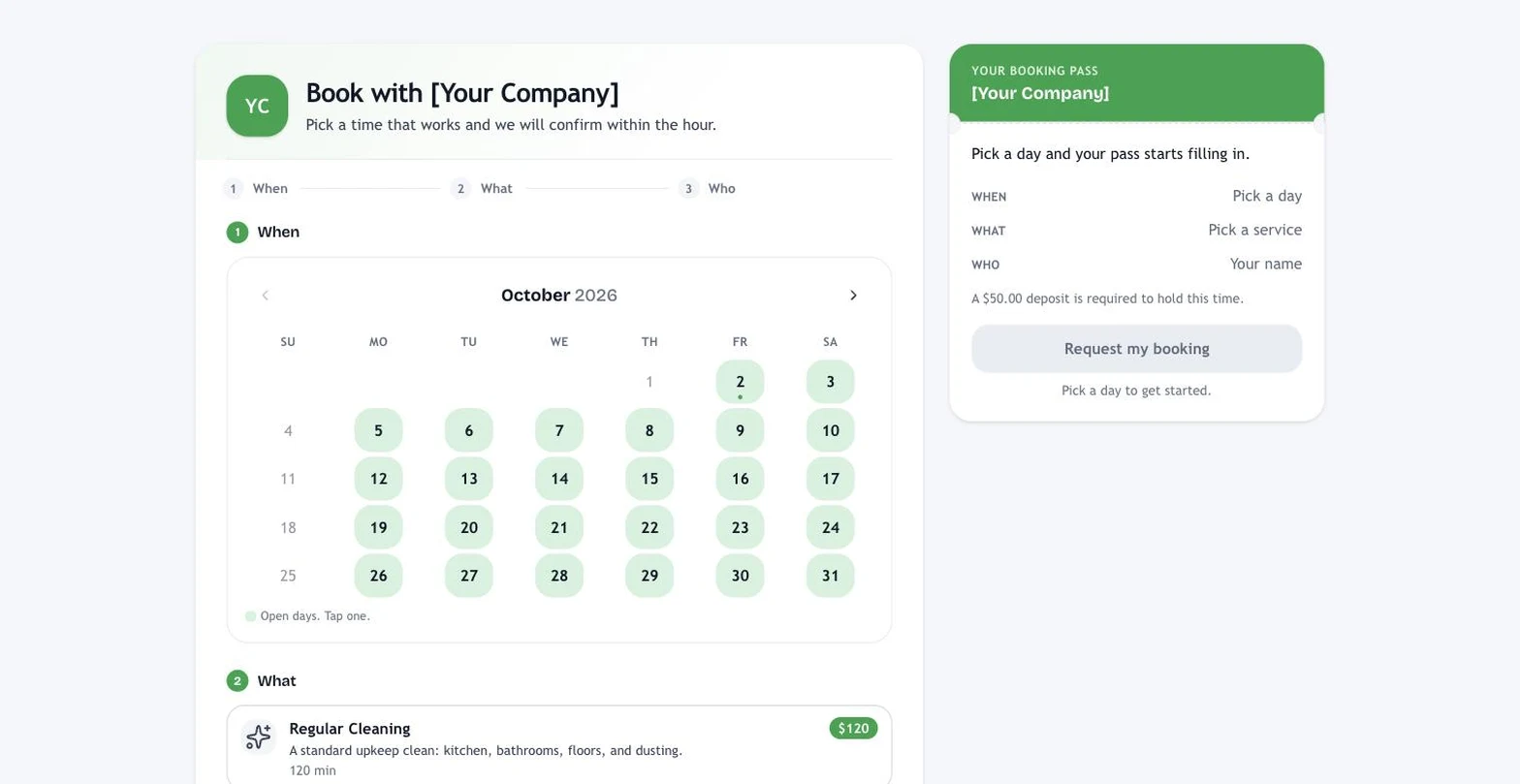
Move-outs, post-construction, and deep cleans are quoted work, not booked work. That is where schedulers quietly fail: there is no quote to approve, no agreement to sign, no follow-up when the quote sits. A real cleaning CRM treats “quote it, chase it, sign it, then schedule it” as one motion. Commercial accounts push further: agreements, statements, and a contact who is not the person paying.
The pricing traps, named
- Appointment caps: entry tiers that stop at N appointments a month turn growth into a forced upgrade
- Per-seat fees: a $29-per-user line item means hiring raises your software bill; crew logins should be free
- SMS meters: reminder texts billed per message make your busiest month your most expensive
- Feature ladders: your own branding or your cleaners’ mobile app sold as a premium tier
Every trap is a real example from this category; the ranked list in best CRM for cleaning businesses names which tool does which, and the ZenMaid and Launch27 pages walk the two most common ladders in detail.
How to pick in one afternoon
Shortlist two tools. Import ten real clients from a spreadsheet into each. Build your three core services, put a form or booking link somewhere real, and run one fake client from lead to paid invoice to review ask. The tool that finishes the loop without a workaround is your answer. If neither finishes, widen the search: my cleaning business software guide covers the full category, and the scheduling-first comparison covers the calendar end.
Where HoundBell fits, stated plainly
HoundBell is my answer to this exact spec: pick Cleaning at signup and the pipeline, quote-request form, starting agreement, booking services, and follow-ups arrive pre-built. Recurring series edit cleanly, autopay is on every plan, crew logins are free, and the Daily Brief writes the morning list. From $57 a month, $47 founding locked for life, unlimited clients and bookings, nothing metered. The honest limits: no crew GPS, no route optimization. Judge it against the seven jobs in the live demo.
The test is one question long: does it start at the lead or at the appointment? Schedulers start at the appointment and are honest, narrow tools. A real cleaning CRM, HoundBell included, starts at the lead and finishes at the review, because that loop, run every day, is what fills next month’s calendar.
Run the loop once, free
Import ten clients, build three services, and take one lead from form to paid invoice. 14 days, no card required.
Start freePrices are from each vendor’s public pricing page in September 2026 and can change; annual and monthly billing are noted where it matters. HoundBell is not affiliated with the companies mentioned; trademarks belong to their owners.

Michael Barros
Founder of HoundBell and of Business All In One Marketing Solutions, a digital marketing agency serving local businesses since 2017. Michael writes about lead capture, follow-up systems, and the software local service businesses run on. More about Michael